
I remember those early years when I recognised my passion for writing. It felt to me like the world had taken on a new colour. I had come across Chinua Achebe’s Arrow of God, with an understanding not yet congruent with the magnitude of that piece of work. But the tradition of scribbling words and sentences together to weave a story appealed strongly to me so that I gave in to it. After secondary school, I spent three months visiting a well-known professor in a neighbouring village with my first manuscript—one I still have unpublished to this day.
It was a beautiful time, yet when I finally gained admission to study English Language and Literature at Nnamdi Azikiwe University, nothing, absolutely nothing, prepared me for the difficulties I had signed up for. It was as demanding as it was rewarding. Four years dragged on at the end of which I graduated—against a staggering stack of odds. So, when I was invited for EASTCOSELS (International Conference for South East Students of English and Literary Studies), second only to ICOSELS (International Conference of Students of English and Literary Studies), at University of Nigeria Nsukka—a university regarded as a pinnacle of intelligence and intellectual experience—who was I not to pack my bags and go?
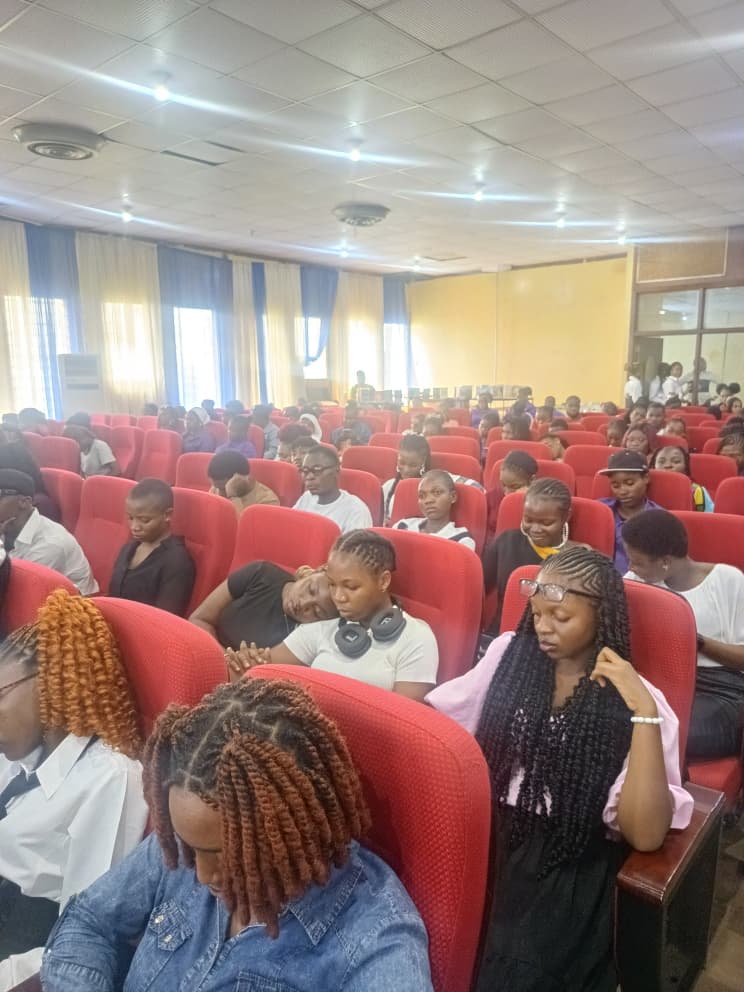
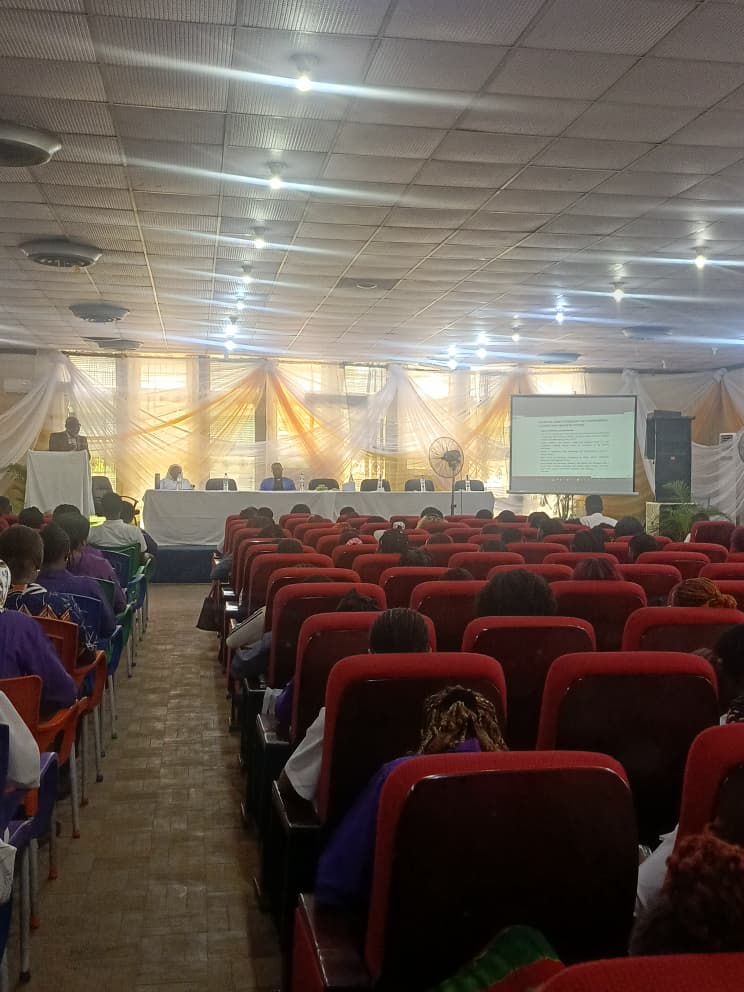
The theme for this year's conference was, From Creative Energy to Knowledge and Economy; Positioning Literary and Linguistics Minds of Leadership and Economic Competitiveness. The hall was packed. In attendance were delegates from almost every school that comes to mind. The place bristled with the expectant energy of students, all of whom had paid for their attendance; to learn, celebrate language and literature for what it was, for four days.
The first speaker, Venerable Dr. John Obasi Kene, started strongly with the question: is it still necessary to study language and literature when AI is seemingly being equipped with the processes that it can do? It was a brilliant question, with a few false premises no doubt—the English Language and Literature department is not only about writing. Writing is but a small quadrant of its looming whole. But to give the benefit of doubt, I wanted to know what this speaker intended to communicate to his expectant audience of established and aspiring intellectuals. And he didn't totally disappoint. The department could not lose relevance, but it indeed had to equip itself with digital literacy. It had to acquire modern skills that could further solidify its importance in an ever-changing society, and beyond. Illustration, cyber security, digital publishing, content writing, copy writing, basic computer and technical skills. Literature was a carrier of culture, he insisted. And he was right to reiterate that.
The next panelist was the HOD of English and Literary Studies at the University of Nigeria Nsukka, Prof. C.F Ononye, who spoke on Linguistics Dynamism in Language Study. A brilliant topic that promised much, yet from which he deviated abysmally. Initially, I had a moment of confusion as to what he was on about. Because, the subtopics were succinct: Intersection of Linguistics, Literature, and Technology; Non-instinctiveness of Language; etcetera. Yet, he veered wildly on a mission to prove why in the next couple of years they might shut down the English and Literary Studies: because it would no longer have any purpose whatsoever. And before you think I didn't hear him correctly, he repeated it twice. I didn't immediately buckle at the knees under the onslaught of incongruous teachings directed at the audience, of which I was a part. No. In fact, I was open to understanding the reasons for position on the issue. He could have valid reasons, and may have arrived at this conclusion from deliberate study of global and local trends; I mean, his portfolio showed that he was an academic who travels widely. It wasn’t until twenty minutes into the lecture that I realized he was on a rant of singing praises to AI. In each of the subtopics that had nothing to do with AI, he kept promoting it, encouraging it, posturing for its importance. He did make an argument that digital publishing is an invention of technology, in comparison to traditional publishing saddled with stifling rules and regulations. True, still, how did AI get dragged into the picture?
I looked around to know if there was a camera somewhere; perhaps the speaker was putting up a show. What in the name of academic posturing was I witnessing? This had to be some conspiracy, an aggressive jab at brilliance.
Do I have anything against AI? Not at all. I think learning AI and Ethics is brilliant. I think, as writers, we need to be aware of the challenges AI could pose. But that wasn't this speaker’s argument. His argument was that AI could do anything … that he used AI generously—which may not be argued. It bears mentioning that this speaker is a professor and one who had attained the height of academic achievement way before AI became a thing; he had gone through the rigors of transforming and submitting his imagination to a lifetime of creative endeavour. His brain had been voluntarily put to task to fully actualize the tenets of The English Language. To get to his current academic position, he’d had to have convinced his peers that he was the absolute best of the lot.
... to understand literature, you must develop competence in language ...
The focus on using AI to write and scrapping an entire department simply because AI is the pinnacle of human civilization is a terrible argument, in my candid opinion. Before now, English Language students were distinct from English Literature students in the department, but in my school days, they were both merged, hence I graduated with a B.A in both Language and Literature. And I am not faulting this. Here's why: to understand literature, you must develop competence in language; you must understand the rules, the reasons for, the thought(s) behind, the construction of such language; you must get familiar with these before you can create literature capable of embodying the values of that language. A lack of understanding of this is tantamount to belittling the usefulness of the tools necessary for improving the craft. Without Discourse Analysis, Structural Functional Grammar, History of English Language, Language Analysis and so much more, the basic understanding of (the English) language—not entirely basic—could be lost. Take for instance SFG ( Systemic Functional Grammar), popularly coined ‘English Maths’, is a deeper level of English usually taught to PhD students. It was introduced at the undergraduate level during my time in school, and I consider it the most nerve-racking of my courses. John + is + a + Boy = John is a boy. This sounds simple till you learn the different processes for deriving this conclusion: why ‘John’ and ‘Boy’ are material processes, why ‘is’ is a mental process, what ‘a’ is; there are six known processes, a Tristastal system and a differentiation of meaning, all intertwined; the reasons why material and mental processes are combined, the syntax rules that govern why ‘John is a Boy’ is correct, and not John a boy, or Boy a John. I remember clear as day what it took to achieve an A, and the extra studying to even comprehend what the hell our Professor was talking about. Let's not forget the phonetics; why certain sounds are similar, what constitutes silent letters and certain combinations to create meaningful words.
The language is a borrower, but with strict rules in place.
The English language is not our native language. It is a borrowed language, but it is the reason we can communicate with more than half of the world, do business with them, and vie for global awards in that category. It is the reason we had to adopt Igbo as a compulsory course as an English Language undergraduate student; the department needed to make us understand that we were simply borrowing the English language. It is with the mastery of the said English language that Prof. Wole Soyinka and Prof. Chinua Achebe put us on the global stage, creating something the inventors of the language tasked themselves to comprehend. Prof. Wole Soyinka made them take a closer look at their own language, clearly deciding to use the language forced upon us as a weapon. Yet, somehow, a HOD of a prestigious institution of learning is telling his audience composed majorly of impressionable students that the department for which Prof. Achebe left Medicine has become obsolete to the extent that he suggests it could be totally scrapped; that the studies that equipped our intellectual forebears to draft articles, newspapers, journals, upon which they made their names and left towering legacies on the global stage were no longer necessary, because of AI—the colossus that has made an appearance on the landscape of our cultural civilization and at whose presence every knee must bow. Still, one hour into his lecture, the audience was yet to be convinced as to why this must be the case.
The problem with this PR for AI lies in its inherent danger. The human brain itself is proven to lose certain capabilities when not put to task.
You would think that the next speaker would do better to wash off the aftertaste of pseudo-academic ramblings that the audience had had to put up with. But no. The next speaker, Dr. Mary JanePatrick Okolie, with the topic, Building Marketing Skills in a Humanitarian Study, continued from where her colleague left off. Hers was a reinforcement of the praises sung to AI. And then she went the extra mile to bring kids into her argument.
The problem with this PR for AI lies in its inherent danger. The human brain itself is proven to lose certain capabilities when not put to task. It is just like any other muscle of the body; they atrophy when not exercised for a prolonged period of time and when disuse and subsequent atrophy of a body part repeats through successive generations, the species evolve to no longer include the said body part in their morphology. This is the entire basis of evolution: the parts that are constantly tasked become more advanced and efficient, and the parts that are no longer being put to use are discarded. In nature, it is simply: use it or lose it.
All over global platforms, people are developing AI capable of building machines; they aim for this after understanding the processes involved in technological advancement. For these ones, AI is a tool and not a replacement. In Nigeria, our cultural and intellectual custodians are instead promoting AI to a group of students, not as a tool, but as a human replacement for the task of critical thinking necessary for an appreciation of philosophy, history and the humanities upon which the civilization of any groups of people are advanced.
The next speaker came on to take this factional sabotage on intelligence a notch higher—a Pastor, and he wore the title with the pride that one is to expect in these climes. On and on he went, talking about I can teach you how to make money, passion is useless—learn what will make you money, I have a friend abroad that learnt medicine in three years, (a claim that could be as untrue as it felt insulting), you can learn a lot of things online. That part about learning a lot of things online is true. The issue with it is his avoidance of the reality of dedication and consistency needed for mastering any (digital) skill.
I sincerely believe that the conference of the 31st of August was not organised with any malicious intent. It genuinely was an attempt to get students prepped for the future, to offer them an insight into the realities of the world—its mechanisms, pitfalls, and reward systems—outside of the psychological confines of school. They were meant to be made aware of the economic realities of the country they call home; a country that mostly offers to its masses passive brutality borne out of malicious negligence. This intent, as genuine as it might be, does not justify the level of flippant disregard for the department and what it stands for. This year's EASTCOSELS did not carry the spirit of literature in any way. AI, despite the praises it enjoyed at the event, has not yet developed to find integral importance in literature; it is for this reason that it is still being treated with skepticism in every literary society. AI has not been equipped with the competence required to create authentic, original writing. You can push to use it for a check on grammatical errors, but for actual writing? AI is known to plagiarize, as it depends on pattern recognition to create anything. It is currently incapable of offering the structured and harsh critique that traditional writing and publishing offers. The question to ask when inputting your prompt is, where is it deriving its output from? Other people's works, I guess. The human brain is a miracle, hence when a class of a hundred sit for an exam, the answers are structured differently to the same conclusion.
What people seem to overlook is that writing (and all forms of it) is a skill on its own, a tedious one. Each part of writing requires a degree of mastery. Every craft in the world—sculpting, painting, music—requires years of learning. The reason why I believe writing or language can't be replaced by AI is that each and every human is distinct and even with the same stimulus, we will individually turn out nonidentical original works. The lack of originality is slowly becoming an issue; it is for this reason that all over the world, AI writing could disqualify you from prestigious awards. And rather than direct students towards excellence, we seem bent on dumbing everything down—lowering pass marks, reducing JAMB qualifications, assisting students to cheat in WAEC exams, facilitating cheating in universities. We are sabotaging our advancement in succumbing to the desire to help students out because we perceive them too soft and stupid to overcome and challenge what they are being taught. And that is why while industrial societies progressively raise the bar of excellence, we constantly see ourselves falling behind, no longer finding a place in the global scheme of things, surely not as the suppliers of labour—a position we once begrudged—but as a disposable statistic to be considered only for the immensity of desirable subterranean potentials we trample with ignorant feet. And this is our looming fate for as long as we normalise this spreading factional gang-up against critical thinking.