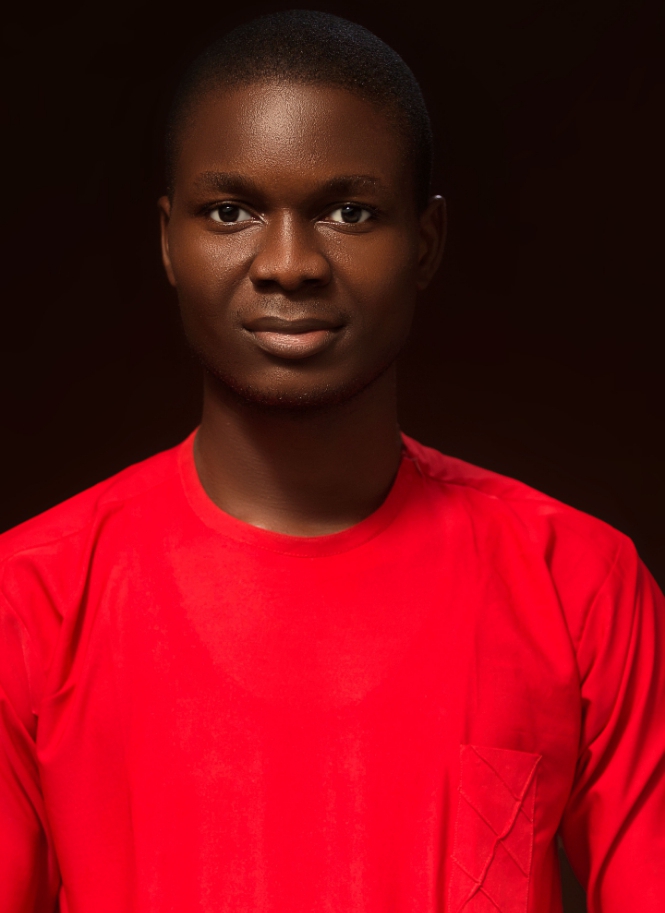
I would like for us to start with talking about your upbringing. How was childhood for you? Where did you grow up?
I was born and raised (partially) in Lagos, until we moved to Ekiti State. While in Lagos, we moved around quite a lot, never really settling in one place for more than five years, mostly because of the nature of my father’s job. So, Lagos for me wasn’t one fixed neighborhood or one particular fond memory. It was many places, many faces, new friends all the time, and many versions of the same city depending on where we were living at the time.
My childhood was not horrible, but it is also not something I find easy to revisit in detail. What I will say, however, is that it shaped me in many ways I am still discovering, especially how I write. Reading and writing for me was escape, in my childhood. It still is. You don’t write a book like Husband Is Useless without having absorbed something from the world you grew up in.
What novels were you exposed to when you began to pick interest in stories?
I started reading very early. My first real love was Queen Primer. My mother was a teacher at the time, and she had gone to a bookstore and got a couple of stationery, amongst which was Queen Primer I. I was quite young then, I think Nursery 2 (you’d be surprised how far back I can remember), and that book shaped my early vocabulary. I went on to read every single version of Queen Primer. But honestly, once something had words on it, I read it. Newspapers, dictionaries, English textbooks . . . anything I could find.
The turning point came around Primary 2 or 3 when I read Koku Baboni by Kola Onadipe. My thirst for reading heightened after that. I went on to read Sugar Girl by the same author, God’s Big Toe by J.Obii J. Nwachukwu-Agbada, Oliver Twist by Charles Dickens, Animal Farm by George Orwell, Arrow of God by Chinua Achebe, Eddie Iroh’s Without a Silver Spoon and Cyprian Ekwensi’s The Drummer Boy. I also read Harlequin and Mills & Boons romances like many Nigerian children did, but what truly captured me was African literature. My father gifted me a copy of Ngugi wa Thiong’o’s book after a business trip to Tanzania, and I also read most of Buchi Emecheta’s works and Chimamanda’s.
Your novel, Husband Is Useless, has become something of a viral sensation in Nigeria, owing to its title. How has the sudden attention been for you?
Sudden attention? Oh, darling! I have always been in the spotlight, so the attention itself was not entirely new to me. What was new, however, was the scale of it and the fact that it was coming from every direction at once. It was coming from all my socials, especially X (Twitter). It felt like everywhere I turned, there was something happening around the book. That part was overwhelming. The noise was a lot, and at some point it became genuinely overstimulating.
So no, I wouldn’t necessarily describe the attention as sudden. I have always been in the spotlight. What was sudden was the sheer volume of the attention that came with Husband Is Useless, and having that level of attention follow me across all my social platforms at once.
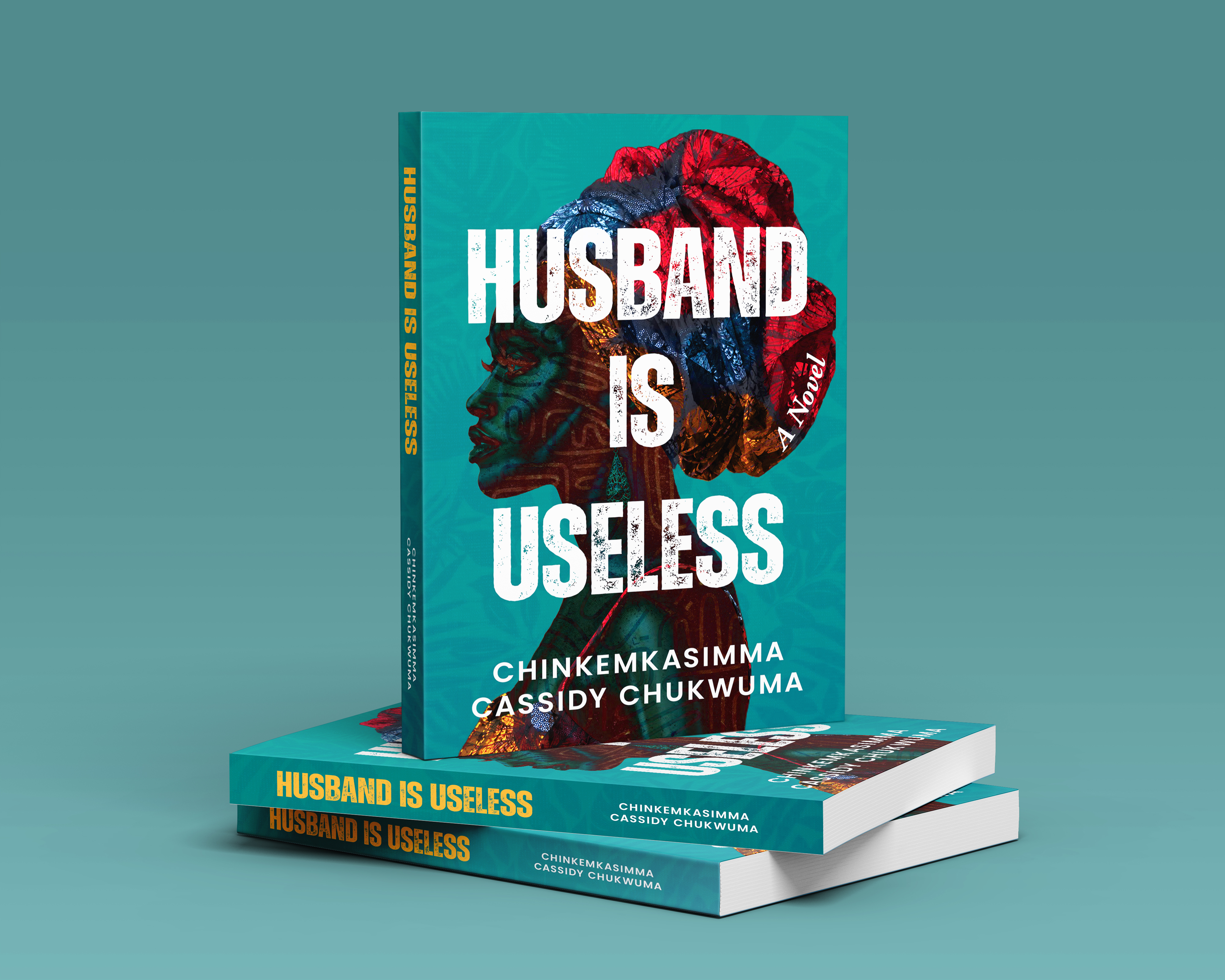
We learned that there were threats from certain quarters, with some making good on it; some people posted ‘reviews’ of your book on social media weeks before its launch, and some readers raised alarm over the ‘availability’ of a version of the book on Amazon before its launch. Looking at all of these, do you interpret this as cancel culture? And what does this portend for Nigeria’s reading culture?
Yes, there were actual threats, both public and in private; especially threats on piracy. But do I interpret all of this as cancel culture? No, I don’t think I would call it that. I think it was more a case of mob behaviour and herd mentality. And that says something quite troubling about Nigeria’s reading culture, no? In many ways, it is in shambles. You simply cannot judge a book by its title and then proceed to form an entire opinion about the author, their upbringing, and/or their character without reading the book.
What was particularly interesting to me—it was actually laughable—was that there was an X Space where people gathered to discuss (more like judge) the book without having read it. I think that speaks to a larger problem. We are increasingly alarmingly becoming a society that reacts before it reads. People don’t engage with literary devices anymore; satire, irony, context, or even the possibility that a title might not mean exactly what they assume it means. They see something, decide what it means to them, and react to that assumption. This actually goes beyond not reading literature. People struggle to read simple captions in front of them. I could write, for example, that the book costs ₦13,000, and would still have people in the comments asking, “How much is the book?”
So yes, I think our reading culture has a serious problem. And what happened with my book was just one very visible example of a much larger issue: people are becoming increasingly comfortable forming strong opinions about things they have not actually taken the time to understand.
Husband Is Useless is richly steeped in pain, sorrow and longing. I can imagine the mix of emotions you’d had to contend with while writing it. Did you feel any form of relief when the story came to an end? Or do you think that there are aspects of feelings you withheld or spared for the sake of maintaining narrative cohesion?
Writing Husband Is Useless was not a walk in the park. I felt every emotion that passed through every single character in the book, and the writing process was at times really tough. In fact, the highest amount of tears I’ve ever shed in my life came from writing this book—during and after. That said, I don’t think the experience caused me any significant damage. Although, when I finally finished the book, I felt a tremendous sense of relief.
I also think trauma can become so heavily relied upon in storytelling that it begins to feel overstimulating ...
There were certainly things I felt during the writing process that I deliberately chose not to put in the book. One of the things I was very conscious of was the tendency towards turning the book into what we might call trauma porn in African literature. Don’t get me wrong, though. As Africans and Nigerians, we tell our lived experiences through literature. But I also think trauma can become so heavily relied upon in storytelling that it begins to feel overstimulating, even when the stories themselves are important.
I wanted Husband Is Useless to engage with pain without exactly reproducing that cycle. So yes, there were things I could have pushed further or made more graphic, but I deliberately held back because I wanted the story to have some narrative restraint.
How did you conceive the idea for this book? When did it first occur to you to write Husband Is Useless?
I’d actually had the idea for Husband Is Useless for quite some time. It was one of those ideas that enters your head and you fling it to the back of your huge mental draft pile and move on. I didn’t even bother writing it down at the time like I had always done with my other ideas, because writing and publishing a whole book felt scary to me even though I have been writing since as far back as I can remember.
It was a Sunday afternoon, I remember clearly. I was with my sister and we’d just started watching a series when all of a sudden, the idea came back to me. This time around, something felt different; the urge to write was very strong and intense. That was when I knew I had to write it. I was suddenly so pumped and energised that I didn’t really give myself the opportunity to overthink it.
The first thing I did was to write a prologue instead of an outline. Interestingly, the completed book doesn’t have a prologue, but the first draft did.
I completed the first draft within eighteen days with approximately 50k+ words, and I was overwhelmed with joy thinking I was finally done, not knowing I was just at the starting line. I had multiple other drafts after that. Hehehehe.
Sade, the narrator in this novel, is the most sharp-tongued main character I have ever encountered in literary fiction. In her outspokenness lies a strong and authentic Nigerianess upon which the narration of the novel is hinged. Did you intentionally set out to achieve this narrative feat with this character or was it a development that revealed itself in the course of writing the novel?
It was intentional from the very beginning. I wrote this book first with the Nigerian audience in mind, so I wanted it to feel unapologetically Nigerian. With Sade specifically, I wanted her to embody the outspoken Nigerian woman. That was exactly how I envisaged her when I first thought of her character. And while she did develop her own personality in the long run, the foundation was very intentional.
In the beginning of your novel, the narrator said of her father: “At night, Pa Ajani became a professional complainer…” That line personally feels too relatable. I felt my own childhood being mirrored in that passage, hence I ask this: what role, in your opinion, does trauma play in shaping our collective approach and response to our world?
Trauma plays a significant role in how we approach and respond to the world, and sometimes if not most, it happens subconsciously. While some people are conscious enough to recognise, “This behaviour is coming from something I experienced,” for others, trauma becomes deeply embedded in their being that they don’t even realise that the way they behave, think, act, talk, is a response to something they experienced in the past.
I also think this is particularly interesting when we look at it from a Nigerian perspective because there are just so many things that have been normalised that really shouldn’t be considered normal. We grew up hearing or experiencing certain things and being told that, “this is just how parents are,” or “this is how children are raised.” So we internalise those experiences. Then, years later, we may have our own families and unconsciously reproduce the same behaviours. We tell ourselves that we are simply giving our children basic training our parents gave us, when in reality we may just be passing unresolved trauma from one generation to the other.
Towards the end of this novel, Sade’s second husband began to lose his mind. The narrator insinuates depression but then admits that Nigerians simply call it madness. As one who talks and writes about mental health, I would like to know what you think of our aversion to discussions on the pressing topic of mental health. What does it portend for us as a collective?
I think firstly, we are uncomfortable talking openly about mental health partly because Nigerians are deeply rooted in spirituality. You could tell your mother or an adult that you are depressed, and their first response is kabashing or saying, “I reject every spirit of depression in your life!”
Now, I’m not saying that spirituality is inherently a bad thing. No. The problem is when we use it to completely replace the psychological and medical understanding of what someone is experiencing.
We haven’t fully come to understand that depression, for example, can be a real mental health condition. We are very quick to interpret it as a spiritual problem, madness, being a weirdo, or simply a lack of faith and laziness in the spirit. But I don’t think it is entirely about spirituality. Nigerians are generally uncomfortable with having difficult emotional conversations. We don’t show emotions well enough. We are almost like walking robots sometimes. You are expected to be strong at all times, to keep going, to not complain or make people uncomfortable with what you are feeling or going through. And I worry about what happens when we continue to approach mental health that way.
I’m afraid people will continue to suffer in silence.
As someone who has been depressed, imagine how it feels when you finally gather the courage to open up and admit you are not okay, or even say you are having suicidal thoughts. Instead of them calmly listening to you, they hit you with: “You don chop?” “Don’t talk like that,” “You better not kill yourself,” “If you die, na you lose.” These people might think it is tough love or whatever it is called. But responses like that are harmful and could cause one to retreat further into themselves. They may decide that if this is what happens when they speak, then they simply won’t speak again.
I think this generation is beginning to have these difficult conversations more openly.
We also can’t pretend or overlook that there is a stigmatisation that comes with admitting you need professional help; the tag of a skor skor person and person wey don kolo before. But I am hopeful. I think this generation is beginning to have these difficult conversations more openly. We are looking out for one another, we’re talking more about mental health, and we are becoming more willing to ask difficult questions. Hopefully, that continues to change how we understand mental health as a society.
Can you tell us one living storyteller you’ve reread the most?
I would say Chimamanda Ngozi Adichie. I’ve reread her books quite a number of times, and I always find myself returning to her works again and again.
Literature is powerful enough to make us see things, relive things, and remember things. What do you expect readers to take home from this explosive novel?
I expect different readers to take different things from Husband Is Useless. I don’t think there is one particular takeaway that I can prescribe for everyone, because every reading experience is different. If I tell you, for instance, that I expect you to read the book and take away something about useless husbands, then I’ve already given you a particular lens through which to read the book. You may then focus on that, even if something else in the story would naturally resonate with you more.
So I don’t necessarily expect readers to take home the same message. I expect them to take something that resonated with them. Whatever that something is, it is for each reader to decide.
What are readers to expect from you in the coming days and months? Book readings? A tour? Festival appearances?
Aha! I like this question. I really, really want to do a lot of book readings. And when I say a lot of book readings, I mean intimate ones where I can actually sit in a cozy space with readers and have very interesting conversations. One thing I genuinely enjoy doing is yapping about my book. So being able to sit in a room with readers and have conversations is something I’m really looking forward to.
I also want to make appearances at book festivals and literary events, and I’d love to do signings as well. And of course, there is more to writing than appearing everywhere. I have several projects I’m working on very carefully, and there is another book on the way. It is a bit different from my debut, so readers might be expecting one particular genre from me, but I’m not exactly going to give them that. Don’t worry though, all my writings wear the same uniform: women.
So yes, expect more books, intimate book readings, events, signings, and hopefully a lot more opportunities for me to sit down with readers and yap about books.
__________________
Copies of 'Husband Is Useless' are available at Tiny Dot Bookstore.